Choeung Ek Genocidal Center
1975
The Beginning of the Purges
April 17, 1975: The Khmer Rouge (CPK) seizes Phnom Penh. They immediately began the forced evacuation of the city’s 2 million residents to rural labor camps.
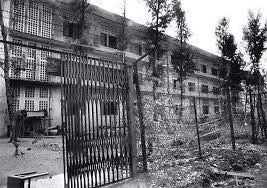
Late 1975: The Khmer Rouge established a network of “Security Centers.” The most notorious, S-21 (Tuol Sleng), was set up in a former high school in Phnom Penh.
1976
The Beginning of the Purges
Early 1976: Initially, executions of ‘enemies’-former government officials and intellectuals-were carried out near S-21. However, as the number of victims grew, the regime began scouting for a more secluded location to dispose of bodies.
1977
Choeung Ek Became the Primary Killing Site
Expansion of Purges: The regime turned inward as internal purges began; Pol Pot targeted his own party members, accusing them of being ‘CIA agents’ or ‘Vietnamese spies’ to justify their execution.
Activation of Choeung Ek: Because S-21 lacked space for more graves and there were concerns about spreading disease from the corpses, Choeung Ek was converted into a dedicated execution ground.
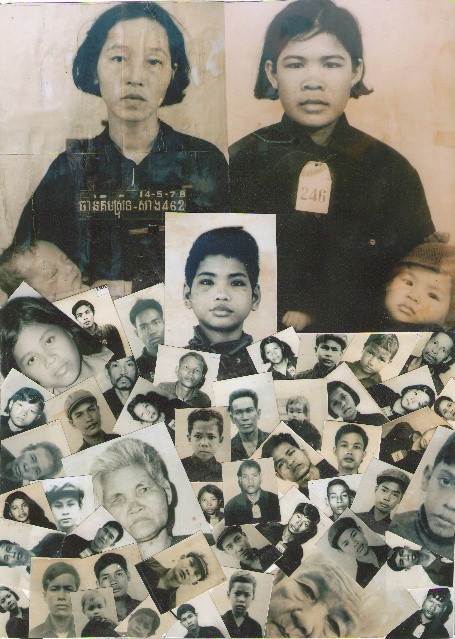
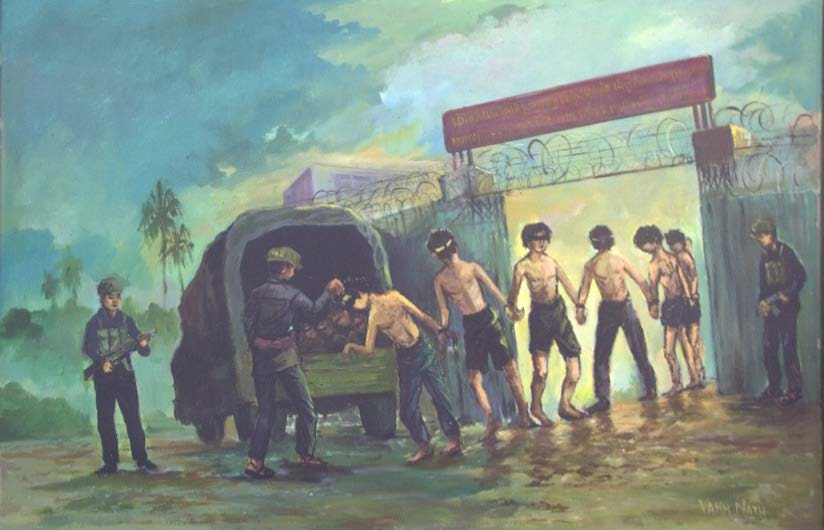
The “Truck” Routine: Several times a week and eventually every night truck carried blindfolded victims from S-21 to Choeung Ek. To maintain secrecy, prisoners were told they were being ‘re-educated’ or moved to a new home.
1978
The Peak of the Atrocities
Industrialized Killing: As the purges intensified, the rate of executions hit its peak, with as many as 300 victims killed during a single night.
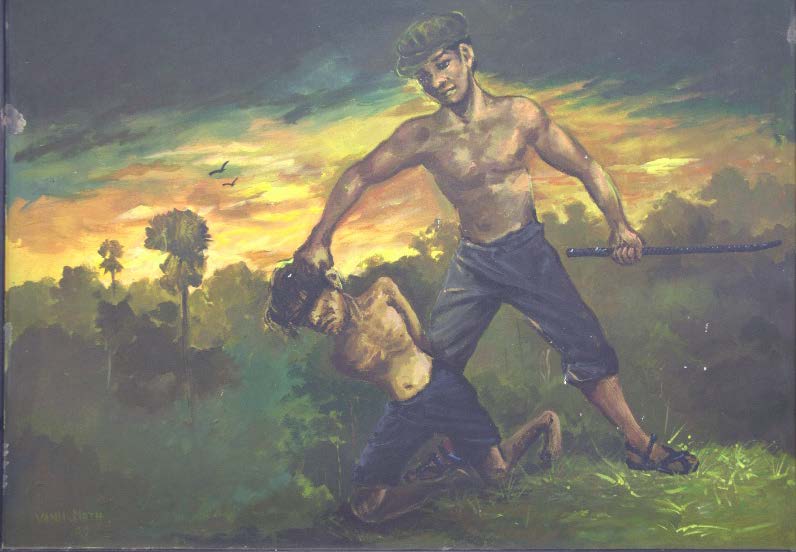
Brutal Methods: To save on expensive ammunition, the Khmer Rouge soldiers used farming tools-shovels, hoes, iron bar and bamboo sticks-to bludgeon victims to death.
The “Killing Tree”: In a brutal attempt to eliminate future opposition, Khmer Rouge soldiers killed infants by striking them against the Chankiri Tree, following a policy of ‘digging up the roots’ to prevent revenge.
Psychological Tactics: Loudspeakers attached to the ‘Magic Tree’ blared revolutionary music and the hum of diesel generators, a chilling tactic used to conceal the sounds of execution from those awaiting their fate.
1979
The Fall and The Excavation Begins
January 7, 1979: Vietnamese forces and the United Front for the National Salvation of Kampuchea captured Phnom Penh. The Khmer Rouge fled the city.
1980
The Fall and The Excavation Begins
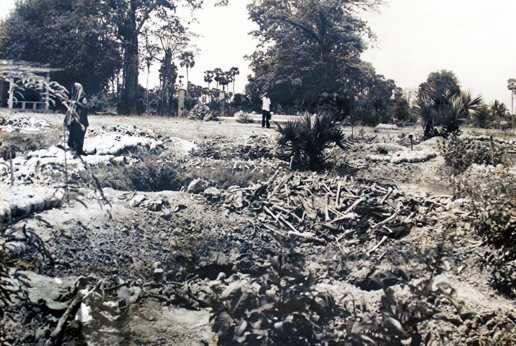
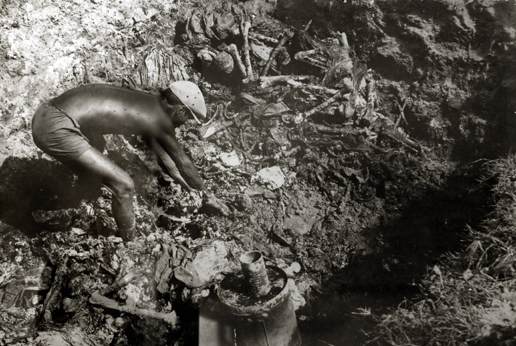
In 1980 the new government began exhuming the graves to document the crimes. Of the 129 graves found at the site, 86 were exhumed, and there were 8,985 bodies.
1982
Protecting the remains and artifacts found at Choeung Ek
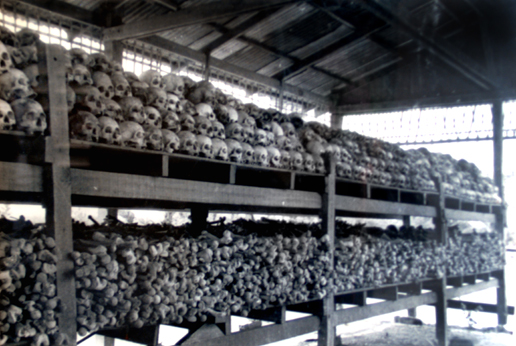
1982: A wooden shed 8 meters wide and 20 meters long with a corrugated zinc roof and standing about half a meter off the ground was constructed by the Department of Culture and Information.
1988
Memorial Stupa at Choeung Ek
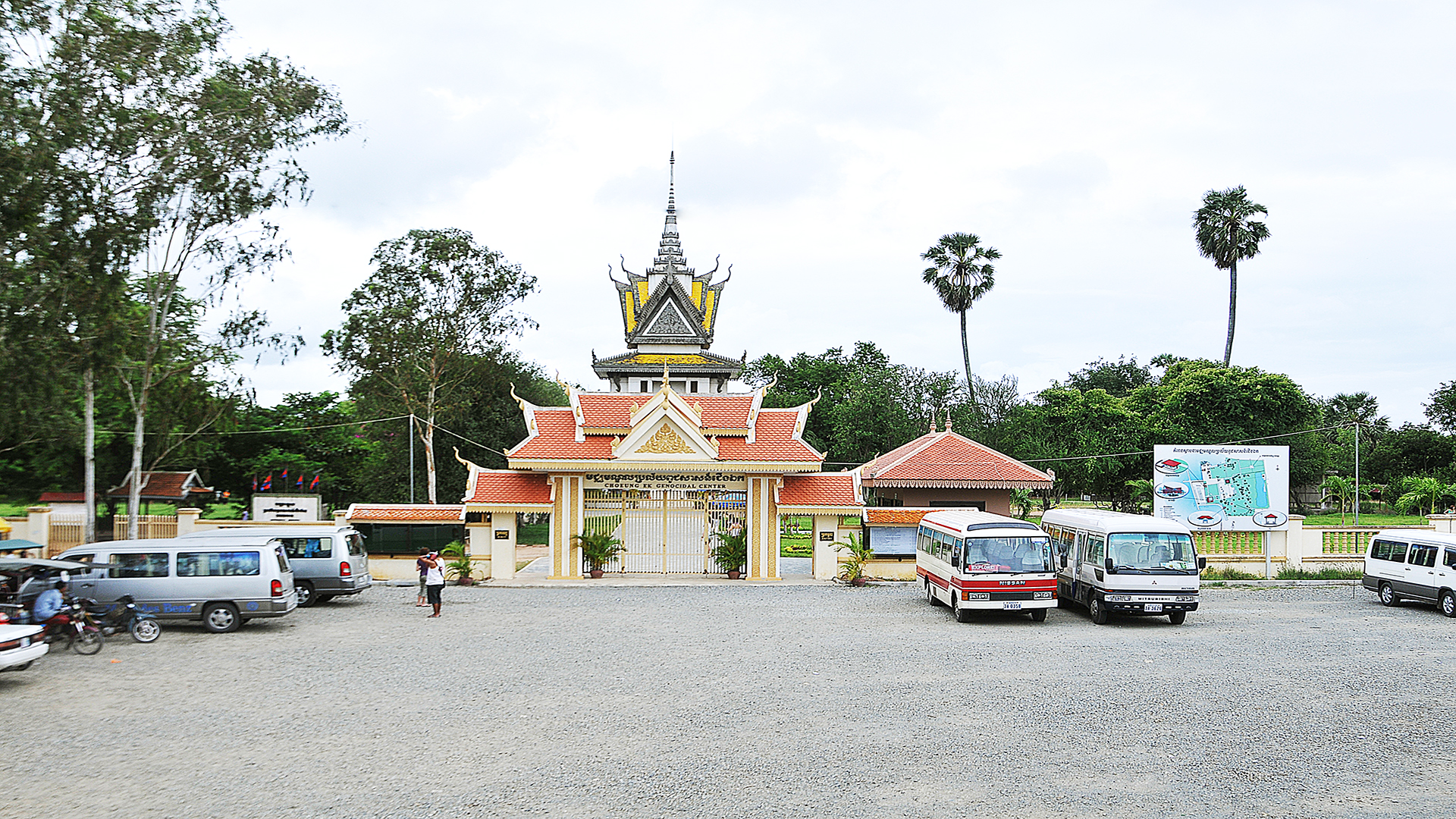
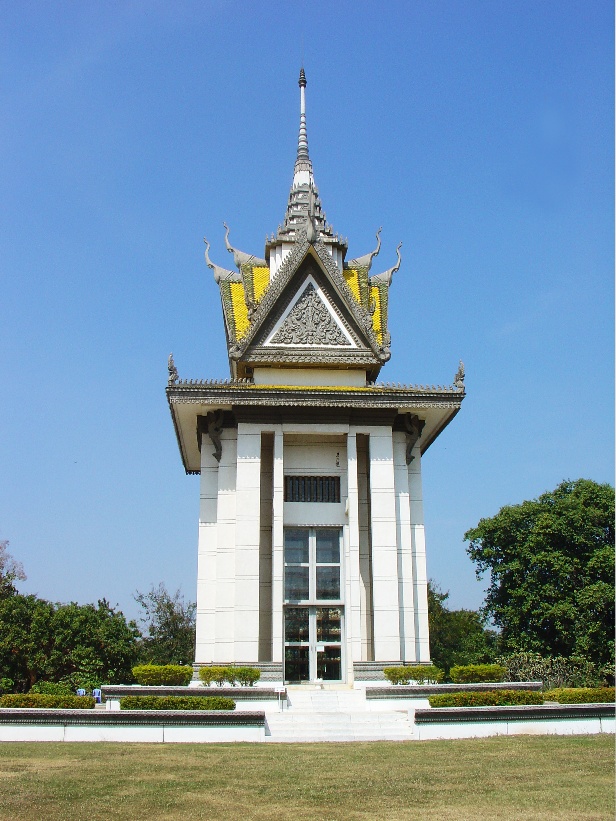
The memorial stupa was built by the Cambodian government in 1988 to preserve the skeletons and honor the memory of the victims who were killed at Choeung Ek Killing Field.
The stupa contains 17 tiers:
- The ground floor: The victims’ clothes have been housed here.
- The 1st-9th tiers: Skulls have been placed on these tiers.
- The 10th- 17th tiers: Different types of bones, including collarbones, shinbones, backbones and mandibles have been houses here.
2009
Exhibition Hall at Choeung EK Genocidal Center
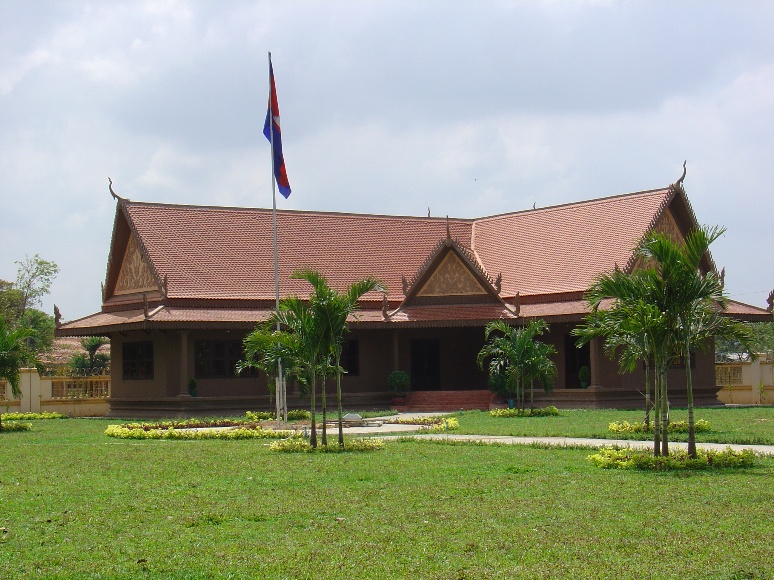
The museum was constructed in 2008 and opened to the public in 2009. The building consists of three rooms: the first is used for permanent exhibitions, the second is a video room and the third temporary exhibitions room. In 2025, to renovate the video screening room to make it more spacious by converting the temporary exhibitions room into the video screening room.
2016
Wooden Pathway
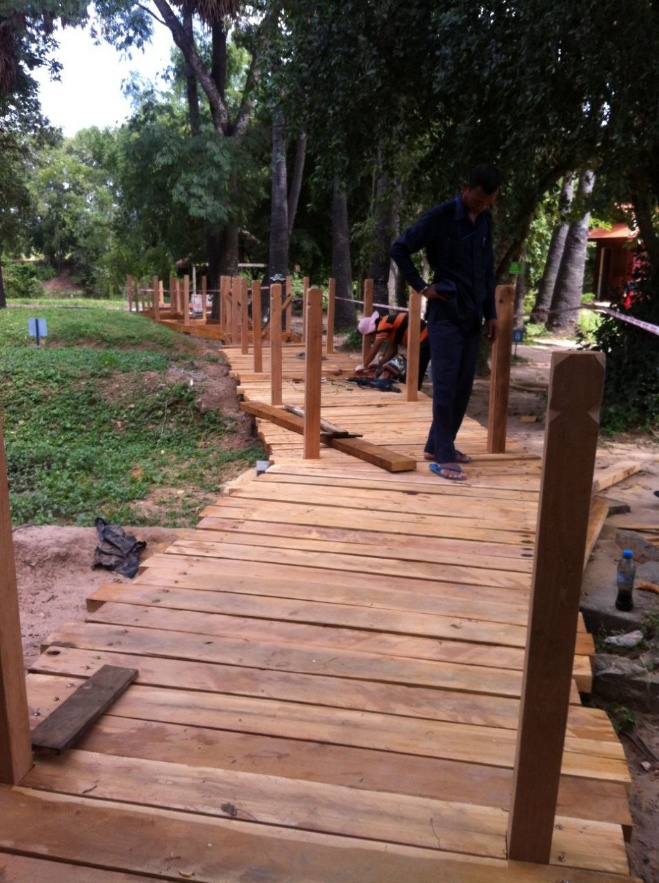
To show respect for the remains of the victims that surface every year after the rain, the wooden pathway was constructed December 2015 and completed in 2016.